
By Calli | Licensed Chiropractor & Esthetician | March 27, 2026
My niece texted me out of nowhere one afternoon. “Unnie, I need a cleansing oil recommendation — which one should I get?” She had just started college, eighteen years old, healthy combination skin with a slightly oily T-zone and the occasional blackhead. Barely wore makeup. And she was about to buy a cleansing oil because she’d seen it trending online.
I texted back: “Actually — I think a cleansing milk would suit you better. Let me explain why.” And that conversation became the foundation of this post.
This is what I see constantly in my practice: people choosing cleansers based on what’s trending, what’s in their favorite influencer’s routine, or what their friend swore by — without ever stopping to ask whether it actually matches their skin. And cleansing, of all the steps, is the one where a mismatch does the most cumulative damage. I’ve seen clients with genuinely healthy skin turn it sensitized and reactive over the course of a year simply by using the wrong cleanser, every single day, with too much enthusiasm.
“Before you layer on the good stuff — the serums, the actives, the treatments — get the cleansing step right. Everything else depends on it.”
This is the cleansing conversation I have with every new client. What cleansing is actually supposed to do, how to read your own skin correctly, which cleanser type fits which skin, and the technique details that make or break the whole step. No trends. No one-size-fits-all. Just what your skin actually needs.
IN THIS GUIDE
- What a Cleanser Should — and Shouldn’t — Do to Your Skin
- How to Actually Know Your Skin Type Right Now
- Cleansing Milk vs Foam vs Oil: Which One Does Your Skin Need?
- Why Eye Makeup Needs Its Own Remover — Not Your Face Wash
- The Cleansing Technique That Actually Works: Morning vs Night
- Do You Really Need to Double Cleanse? The Honest Answer
- 5 Cleansing Mistakes That Are Quietly Breaking Down Your Skin Barrier
1. What a Cleanser Should — and Shouldn’t — Do to Your Skin
It sounds obvious — but the answer shapes every decision that follows, so it’s worth being precise about it.
A cleanser’s job is to remove three things: excess sebum that has built up on the skin surface, environmental debris like pollution and dust, and residue from the products you applied earlier — SPF, makeup, skincare. That’s it. It is not supposed to strip the skin bare, close the pores, eliminate all oil, or leave a tingling sensation that signals “deep clean.” When a cleanser does those things, it isn’t working well. It’s overstepping.
Your skin maintains a slightly acidic film on its surface — the acid mantle — with a pH of around 4.5 to 5.5. This layer is the skin’s first line of barrier defense. A cleanser that’s too alkaline disrupts it, which triggers a predictable set of downstream problems: tightness, rebound oiliness, sensitization, and impaired absorption of everything you apply afterward. You can spend a lot of money on serums and actives, and if your cleanser is undermining the barrier every morning and evening, those products are working at a significant disadvantage.
The goal of cleansing is a face that feels clean and comfortable. Not squeaky. Not tight. Not that feeling where your skin almost pulls when you smile. If that’s what you experience after washing, the cleanser likely isn’t right for your skin — and it’s worth reassessing rather than pushing through it.
Calli’s Tip
The “squeaky clean” feeling is one of the most misleading sensations in skincare. Most people read it as thorough cleansing. In my experience, it more often means the barrier has been disrupted. Well-cleansed skin should feel the same way clean hands feel after a gentle soap — not like they’ve been scrubbed with dish detergent. Choose your cleanser accordingly.
2. How to Actually Know Your Skin Type Right Now — Not the One You Had at 18
Before anything else: do you actually know your current skin type? Not the one you identified in high school. Not the one your mom told you you had. Your skin type shifts with age, hormones, seasons, and changes in your routine — what was oily at nineteen may be combination at thirty-five and significantly drier by fifty.
Here’s the most reliable way to assess where you actually are right now. Wash your face with a very gentle, neutral cleanser. Apply nothing afterward — no toner, no moisturizer. Wait sixty minutes, then look closely and notice how it feels:
- Oily skin: Visible shine across most of the face — forehead, nose, cheeks, and chin — within the hour. Pores tend to appear more visible, especially in the T-zone
- Dry skin: Tightness, possible discomfort, maybe some rough patches around the cheeks or jaw. Very little to no shine
- Combination skin: Shine in the T-zone, cheeks feeling relatively comfortable or slightly dry. The most common type in adults — and the one most often mistreated with cleansers that are too strong
- Sensitive skin: Redness, stinging, or a reactive sensation even with nothing applied. This is a condition that can sit on top of any skin type, not a type in itself
- Normal skin: Balanced, comfortable, not reactive. Relatively forgiving with product choices
One distinction worth knowing: dehydrated skin and dry skin are not the same thing. Dry skin is a type — it produces less sebum. Dehydrated skin is a condition — it lacks water. Oily, dehydrated skin is genuinely common, and people with it often over-treat their skin because they see oiliness and assume hydration isn’t needed. It very much is.
Calli’s Tip
Also consider how much makeup you actually wear day-to-day — this matters as much as skin type when choosing a cleanser. SPF-only with no base? Light coverage? Full foundation? The heavier your daily product load, the more thorough your evening cleanse needs to be. A teenager or young adult with minimal makeup has very different cleansing needs from someone who wears a full face for work every day.
3. Cleansing Milk vs Foam vs Oil: Which One Does Your Skin Actually Need?
Back to my niece. Eighteen years old, combination skin, slightly oily T-zone, blackheads here and there, barely wears makeup. She wanted a cleansing oil because she’d seen it everywhere. And while cleansing oils are genuinely useful for the right person — they weren’t what her skin needed.
A cleansing oil on minimal-makeup combination skin can leave a film that not all skin types clear easily on its own, and for blackhead-prone skin in particular, the emulsification step is critical and easy to get wrong. What I recommended instead was a cleansing milk — and here’s why that made more sense for her skin.
Cleansing Milk — For Healthy, Combination, Dry, or Low-Makeup Skin
Cleansing milk is underrated and, in my view, underused. It’s a gentle emulsion — typically water and mild emollients — that dissolves surface impurities and light SPF without stripping the skin’s natural oils. It rinses cleanly, leaves the skin comfortable, and is unlikely to disturb even a skin barrier that’s on the more reactive side.
For someone with healthy, combination skin who doesn’t wear heavy makeup, this is often all you need. Apply it to slightly damp skin, massage gently in circular motions for about 30 seconds — the emulsification process is part of what makes it effective — then rinse with lukewarm water. The skin should feel clean, balanced, and completely comfortable. No tightness. No residue.
I also recommend cleansing milk to clients with dry or sensitized skin who find that even gentle gel formulas leave their face feeling a little stripped. It’s one of the most reliably non-disruptive options available.

Gel or Weak-Acid Foam Cleanser — For Oily, Acne-Prone, or Heavy Makeup Days
For oily or acne-prone skin — or on days when you’ve worn full coverage makeup or a high-SPF sunscreen — a gel or lightly foaming cleanser is generally a better fit. It cuts through excess sebum more effectively and gives a more thorough cleanse of congested pores.
The key word here is weak acid. A pH-balanced, mildly acidic foam cleanser — around pH 5 to 6 — cleanses effectively without disrupting the skin’s acid mantle. This is the range I look for. A strongly alkaline foam cleanser (many inexpensive options fall in the pH 8–10 range) will cleanse aggressively and leave the skin feeling very clean in the short term — but used daily, it progressively dries and sensitizes the skin. I’ve seen this pattern many times in clients who couldn’t understand why their skin felt increasingly reactive despite doing nothing differently. Often, it was the cleanser.
Cheap does not always mean bad — but cheap and strongly alkaline used every single day is a reliable path to a compromised barrier. This is one area where the ingredient list and pH actually matter more than the price tag.
👉 Weak-Acid Foam Cleanser I Recommend

Calli’s Tip
Your cleanser is one of the most important product decisions in your routine — because you use it every single day, twice a day, directly on your barrier. It doesn’t matter how good your serum or moisturizer is if the cleanser you’re using is slowly wearing down the surface it’s supposed to be treating. Get this step right first, then build everything else on top of it.
4. Why Eye Makeup Needs Its Own Remover — Not Your Face Wash
If you wear eye makeup — mascara, eyeliner, eyeshadow — your regular cleanser is not going to remove it properly. I want to be very direct about this because I see a lot of people trying to rub away mascara with a face wash and then wondering why they’re developing sensitivity around the eye area or accelerating fine lines.
Eye makeup, especially anything water-resistant or long-wearing, is formulated specifically to stay put through humidity, sweat, and normal face-washing. A cleansing milk or gel cleanser isn’t designed to break it down — and when you try to compensate by rubbing harder or longer, you’re applying mechanical friction to the thinnest, most delicate skin on your face. The skin around the eye has very little underlying fat padding, minimal sebaceous glands to support barrier repair, and is one of the first areas where repeated friction accelerates visible aging. This is not an area to be casual about.
A dedicated eye makeup remover dissolves what the face cleanser can’t, in one pass, with minimal rubbing required. What I look for in a good one: a gentle bi-phase or micellar formula, no fragrance, no alcohol, no ingredients that cause stinging on contact with the eye. Some products that are technically effective contain so much mineral oil or harsh solvent that they sting the moment they get near the eye — that’s not a trade-off worth making. A good eye makeup remover should feel like almost nothing. One gentle press with a soaked cotton pad, hold for a few seconds to let it dissolve, then wipe away with almost no friction needed.
👉 Eye Makeup Remover I Recommend
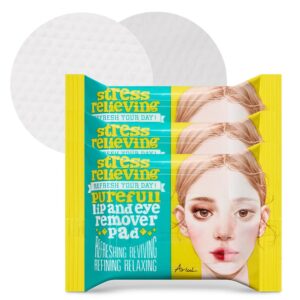
The one I personally use removes everything cleanly in one pass, causes zero stinging, and is compact enough to take anywhere. It’s one of those products that once you find a good one, you stop thinking about it — which is exactly what a good makeup remover should be.
Calli’s Tip
Eye makeup remover always comes before your face cleanser — not instead of it. Remove the eye area first, then cleanse the rest of the face as normal. And if your eye makeup remover stings even slightly on contact with your eyes, that’s a sign to find a different one. The eye area is not the place to tolerate irritation for the sake of effectiveness.
5. The Cleansing Technique That Actually Works: Morning vs Night
Choosing the right cleanser matters. The technique you use with it matters just as much — and it’s the part most people have never been explicitly taught.
The Basics That Apply Every Time
- Water temperature — always lukewarm. Hot water feels thorough but is consistently too disruptive to the skin’s oil balance and barrier integrity. Cold water doesn’t rinse cleanser residue effectively. Lukewarm every time, without exception
- Time — at least 30 to 60 seconds. Most people spend 10 to 15 seconds. The cleanser needs genuine contact time to dissolve sebum and debris — and those seconds are also when you can work it into the hairline, the sides of the nose, and the jawline where residue tends to accumulate and cause congestion
- Pressure — fingertips only, gentle circular motions. No washcloths with friction, no spinning brushes on sensitive skin, no pulling or tugging. The face doesn’t need mechanical force to get clean
- Drying — pat, never rub. A clean, soft towel, patted gently. Rubbing creates friction that leaves skin reactive, especially around the eye and jaw area
- Next step — apply while slightly damp. Toner or the next product goes on while the skin is still lightly damp for better absorption
Morning — Keep It Simple
In the morning, your skin has been resting — no pollution, no SPF, no makeup. What’s accumulated overnight is primarily sebum and a small amount of residue from your evening skincare. For most skin types, this does not call for an aggressive cleanse. For dry and sensitive skin, lukewarm water followed by toner is often genuinely sufficient. For oily and combination skin, a gentle cleansing milk or gel is appropriate. Over-cleansing in the morning is extremely common in people whose skin feels increasingly reactive — and it’s often the easiest fix available.
Evening — This Is the One That Counts
The evening cleanse is the important one. It’s removing a full day of SPF, makeup if you wear it, pollution, oxidized sebum, and morning skincare residue. This is the accumulation that — left on the skin overnight — contributes to congestion, dullness, and skin that seems slow to improve no matter what you add to your routine. Take your time here. Work through the full technique, cover the full face, and rinse thoroughly.
Calli’s Tip
Wash your hands before cleansing your face — every time. You’re about to massage your face with those hands for 30 to 60 seconds. It sounds like a small thing. It genuinely isn’t.
6. Do You Really Need to Double Cleanse? The Honest Answer
Double cleansing — an oil-based or balm cleanser first, followed by a water-based cleanser second — is genuinely useful in certain situations. It is not a universal requirement, and for some skin types it can actually be too much.
Double Cleanse Makes Sense When:
- You wear full coverage foundation or long-wearing base products regularly
- You use a high-SPF or water-resistant sunscreen daily — these don’t break down reliably with a single water-based cleanse
- You have oily skin and consistently congested pores that aren’t responding to your current routine
It’s Probably Not Necessary When:
- You wear minimal or no makeup — like my niece, a cleansing milk alone is sufficient
- You have dry or already-reactive skin — double cleansing may push a sensitized barrier further into irritation
- Your skin is balanced and your current single-cleanse routine is working well
How to Do It Correctly
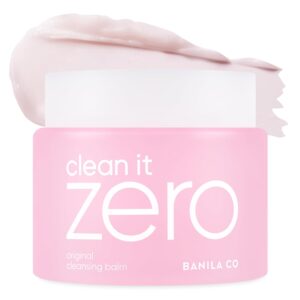
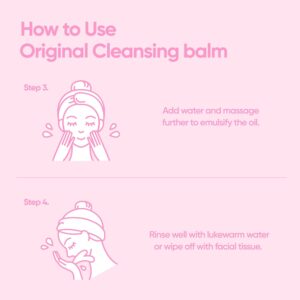
Step one: oil-based cleanser or balm applied to dry skin, massaged for 30 to 60 seconds, then emulsified with a little water before rinsing. This step breaks down oil-based residue — sunscreen, foundation, sebum. Step two: your regular water-based cleanser on damp skin, another 30 to 60 seconds, rinsed thoroughly. Both should be gentle. Double cleansing doesn’t mean doubling up on harshness — two mild cleansers in sequence will always outperform one aggressive one.
👉 Cleansing Balm for Step 1 Double Cleanse
Calli’s Tip
Double cleansing is an evening-only practice. In the morning, a single gentle cleanse — or just water and toner — is almost always enough. Double cleansing every morning is one of the more common contributors to morning skin sensitivity and reactivity that I see in consultations.
7. 5 Cleansing Mistakes That Are Quietly Breaking Down Your Skin Barrier
I want to be honest about the patterns I see most often — because they’re almost always well-intentioned, and that makes them harder to recognize as the problem.
The one I encounter most frequently: someone using a strongly alkaline foam cleanser every morning and evening — sometimes with a cleansing brush — because the squeaky-clean feeling has become their benchmark for a good cleanse. They may even be doing a three-step cleanse because they’ve read that’s the thorough approach. And over months, their skin becomes progressively more reactive, more sensitive, more prone to redness — the opposite of what they were working toward. The culprit is almost always the cleanser pH, the frequency, or the mechanical friction from the brush. Sometimes all three.
The skin barrier is not a surface that benefits from aggressive daily stripping. It’s a living structure that regenerates and repairs — but only when it’s given the conditions to do so. A mildly acidic cleanser used with gentle technique, twice a day, is genuinely all most skin types need. The more elaborate the cleansing ritual, the more worth asking whether it’s actually helping or whether it’s become the obstacle.
- Using a strongly alkaline cleanser daily. Inexpensive foam cleansers often have a pH of 8 to 10. Used every day, they gradually disrupt the acid mantle and create the sensitization, redness, and reactive oiliness that people then try to treat with more products — when changing the cleanser would often resolve it
- Using a cleansing brush aggressively. Brushes are not inherently bad — but used with pressure, on sensitized skin, daily, they add mechanical friction that the barrier doesn’t need. If you use one, use it gently and not every day
- Rinsing too quickly. Ten to fifteen seconds isn’t enough contact time. Take the full thirty to sixty seconds and actually work the product across the whole face
- Skipping the evening cleanse. Morning cleanse is optional for some. Evening cleanse is not negotiable. Sleeping in SPF and environmental residue consistently slows down the skin’s overnight repair cycle
- Choosing a cleanser based on trends rather than skin type. Cleansing oil is not for everyone. Foam cleanser is not for everyone. The right cleanser is the one that matches your skin — not your FYP
Calli’s Cleanser Picks
Every product I recommend in this post — matched by skin type and use case.
- 👉 Cleansing Milk — Find the gentle milk cleanser I recommend for combination, dry & minimal-makeup skin
- 👉 Weak-Acid Foam Cleanser — Explore a pH-balanced foam option for oily & acne-prone skin
- 👉 Eye Makeup Remover — Shop the gentle bi-phase remover I use — no stinging, removes everything in one pass
- 👉 Cleansing Balm — Find the step-one balm for heavy makeup or SPF days
Coming Up Next on CalliGlowAlign
How to Find the Right Toner for Your Skin — And How to Actually Use It
Toner is the step most people either skip entirely or use wrong. I’m breaking down what toner actually does, how to find one that matches your skin type, and the exact way I use it in my own routine — morning and evening.
👉 Bookmark this page or subscribe to be notified when it goes live.
Get the cleansing step right — and everything you put on after it will finally have a chance to actually work.
— Calli
DC, LE | Licensed Chiropractor & Esthetician
As an Amazon Associate, I earn a small commission from qualifying purchases at no additional cost to you. All products featured are ones I personally use and recommend. My opinions are always entirely my own.
The information shared in this post reflects my personal experience and professional perspective as a licensed chiropractor and esthetician. It is intended for general educational and informational purposes only, and is not a substitute for personalized advice from your own dermatologist, esthetician, or healthcare provider. Every skin is different — please listen to yours.
Related Articles