
By Calli | Licensed Esthetician | March 28, 2026
The toner step is where most skincare routines either level up — or silently fall apart. And most people have absolutely no idea which one is happening to them.
I’ve sat across from hundreds of clients who were doing everything “right” — double cleansing, layering serums, SPF every morning — and still dealing with dryness, texture, or breakouts they couldn’t explain. Nine times out of ten, the culprit was their toner. Either the wrong formula for their skin type, or worse: a formula actively damaging their barrier while they thought it was helping.
As a licensed esthetician, toner is one of the first things I ask about in every new client consultation. It matters that much. So let’s fix it — for good.
IN THIS GUIDE
1. What Toner Actually Does — And Why It’s Not Optional
Most people think toner is just a “prep” step — something you swipe on before the real products go on. That’s a massive undersell. Done right, toner is doing some of the heaviest lifting in your entire routine.
After cleansing, your skin’s pH is disrupted. Healthy skin sits at around pH 4.5–5.5 — slightly acidic. Most cleansers, even gentle ones, push that pH higher. When your skin is out of its optimal range, every product you apply afterward absorbs less effectively. Toner rebalances that pH immediately, resetting the surface so your serum and moisturizer can actually penetrate and perform.
Beyond pH, modern toners deliver concentrated hydration, dissolve dead skin cells, regulate oil, or reinforce your barrier — depending on the formula. The wrong one does the opposite of all of that.
Calli’s Tip
Apply toner within 60 seconds of cleansing — while your skin is still slightly damp. That brief window is when absorption is at its peak. Wait too long and you’ve already lost the optimal moment.
2. The Right Toner for Your Skin Type — Stop Using the Wrong Formula
Dry Skin: You Need Hydration That Goes Deep
If your skin feels tight after cleansing or soaks up moisturizer like it’s starving — your toner needs to deliver water into the cells, not just sit on the surface. Look for:
- Hyaluronic Acid — draws moisture from the environment into skin; holds up to 1,000x its weight in water
- Collagen-supporting peptides — maintain elasticity and plumpness long-term
- Glycerin — a powerful humectant that binds moisture at the surface level
I personally love a viscous, slightly gel-like toner for dry skin — what Korean skincare calls a “skin” (스킨). That thicker consistency delivers hydration more intensely than watery formulas and layers beautifully without pilling.
💙 Esthetician Approved · Dry Skin
Hyaluronic Acid Toner
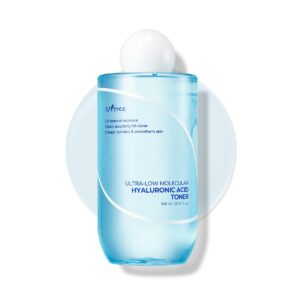
Deeply hydrating · Viscous formula · Plumps instantly
What I Recommend to Every Dry Skin Client
Oily & Acne-Prone Skin: Exfoliate, Don’t Strip
The biggest mistake I see with oily skin clients: reaching for a harsh astringent that leaves skin feeling “squeaky clean.” That tightness is your barrier being damaged — and your skin will overcompensate by producing even more oil within hours. Oily skin needs chemical exfoliating toners instead:
- BHA (Salicylic Acid) — oil-soluble, penetrates directly into the pore to dissolve buildup and prevent breakouts
- AHA (Glycolic or Lactic Acid) — exfoliates the surface, clears dead skin cells that clog pores and dull the complexion
- Niacinamide — regulates sebum production and visibly minimizes pore appearance over time
💙 Esthetician Approved · Oily & Acne-Prone
BHA Exfoliating Toner
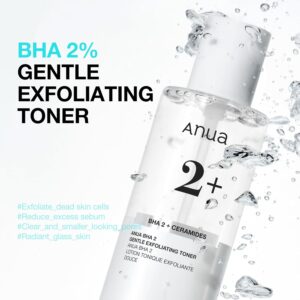
Clears pores · Controls oil · Zero stripping
My Clients Love This — Results in 2 Weeks
Brightening & Anti-Aging: Go Functional
If dark spots or uneven tone are your concern, your toner can be doing active corrective work — not just prepping. Functional brightening toners contain Vitamin C, Niacinamide, or tranexamic acid that target melanin production at the cellular level. Applied directly to freshly cleansed skin, the toner step is one of the highest-absorption moments in your entire routine.
💙 Esthetician Approved · Brightening
Vitamin C Brightening Toner
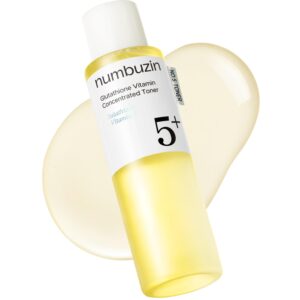
Fades dark spots · Evens skin tone · Fast-acting
What I Use in Clinic for Visible Brightening
Calli’s Tip
Combination skin? Use two toners — a hydrating formula on dry cheeks, a BHA on your T-zone. Takes 30 extra seconds. Makes a real difference. Your face isn’t one skin type, so stop treating it like it is.
3. Wipe-Off vs. Pat-In — The Method Changes Everything
Cotton Pad Wipe-Off (닦토 · Dak-To)
Wiping toner with a cotton pad provides a secondary cleanse — picking up residue, excess sebum, or sunscreen your cleanser missed. It also delivers mild physical exfoliation. Best for oily and combination skin types, and for exfoliating toners (AHA/BHA) where even surface distribution matters most. Use a soft, lint-free cotton pad only — rough cotton creates microtears on freshly cleansed skin.
Hand Pat-In (손토 · Son-To)
Pour a small amount into your palms, press hands together to warm slightly, then press gently into skin — no dragging, no friction. Best for dry, sensitive, and compromised skin types. The warmth from your hands opens the surface and maximizes penetration of hydrating formulas.
Calli’s Tip
For thick, gel-like hydrating toners — try the 7-skin method. Apply 5 to 7 thin layers by hand, letting each absorb before the next. It sounds excessive. The results are not. Your skin will be so plump that moisturizer becomes almost optional.
4. High-Alcohol Toners: The One Thing I’ll Always Tell You to Throw Out
If your toner lists alcohol denat., SD alcohol, or isopropyl alcohol in the first five ingredients — stop using it today. Not reduce. Stop. Here’s exactly what’s happening every time you apply it:
- Barrier destruction: High-concentration alcohol dissolves the lipid matrix that keeps moisture in and irritants out — once compromised, bacteria, pollution, and allergens move freely into your skin
- Rebound oiliness: Alcohol strips sebum so aggressively that sebaceous glands overproduce within hours — making oily skin measurably worse over time
- Sensitization spiral: A damaged barrier becomes reactive, inflamed, and intolerant — a pattern I see constantly in clients who’ve used alcohol-heavy toners for years without connecting the dots
The “clean, tight, refreshed” sensation is not your skin being healthy. It’s your nerve endings registering irritation. There is a real difference — and now you know it.
Calli’s Tip
Not all alcohols are harmful. Fatty alcohols like cetyl alcohol and cetearyl alcohol are actually conditioning and barrier-supporting. The ones to avoid are short-chain drying alcohols. Flip the bottle, check the first five ingredients, make the call in 10 seconds.
5. Calli’s Professional Pick
Every product I recommend I’ve tested on my own skin and vetted ingredient-by-ingredient. These three cover every skin type and concern I address in my practice.
Coming Up Next on CalliGlowAlign
Brightening Ingredients That Actually Work — And the Ones That Are Just Expensive Marketing
Vitamin C, niacinamide, tranexamic acid, arbutin — the brightening aisle is full of overpriced promises. I’m breaking down exactly which actives have the clinical evidence, which forms to look for on the label, and how to layer them for real results.
👉 Subscribe or bookmark — this one will change how you shop for skincare.
Your routine is only as strong as its weakest step. Don’t let your toner be that step.
— Calli
DC, LE · Chiropractor & Licensed Esthetician
I don’t do generic advice. Everything I write, I’ve tested on my own skin, applied in my clinic, and would stake my license on. If it’s here — it works.
As an Amazon Associate, I earn a small commission from qualifying purchases at no additional cost to you. All products featured are ones I personally use and clinically recommend. My opinions are always entirely my own.
Related Articles