
By Calli | Licensed Chiropractor & Esthetician | March 30, 2026
Last month, a new patient sat down across from me in my clinic and slid a grocery bag full of supplement bottles onto the table. Magnesium. Iodine. Vitamin D — 10,000 IU daily. Iron. B12. Ashwagandha. Berberine. A hair, skin, and nails formula with 5,000 mcg of biotin. She had been taking all of them for six months, based entirely on YouTube videos and wellness influencers she trusted.
She came to me because she felt worse than when she started. Her heart was racing. Her skin had broken out more than ever. Her period was irregular. Her anxiety — the very thing the ashwagandha was supposed to fix — had gotten worse. And after reviewing her case, I could see exactly why. She had been supplementing completely blind, with no idea what her body actually needed or already had too much of.
She is not an outlier. I see versions of this story in my clinic every single week. And as someone with dual licenses in chiropractic care and esthetics — someone who has spent years studying how the body’s systems interconnect — this pattern genuinely worries me.
“I’m not anti-supplement. I’m anti-guessing. And right now, most people are guessing.”
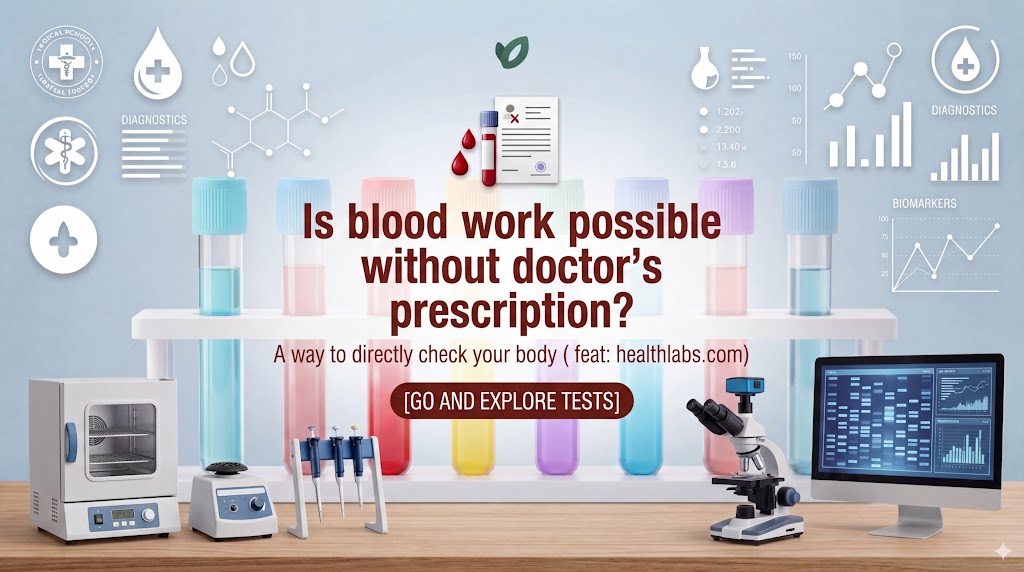
This post is the introduction to my Stop Guessing Your Health blood work series — a guide I’ve been meaning to write for a long time. Today I’m breaking down why blood work needs to come before any supplement protocol, what happens when it doesn’t, and how you can actually order lab tests yourself without a doctor’s visit, without insurance, and without waiting weeks for an appointment.
IN THIS GUIDE
1. The Supplement Culture Problem Nobody Is Talking About
Let’s be honest about what’s happening out there right now. TikTok and YouTube have created an entire generation of self-diagnosing wellness consumers who are spending hundreds of dollars every month on supplements based on a 60-second video from someone with a ring light and a good thumbnail.
I understand the appeal completely. The healthcare system is expensive, slow, and often dismissive — especially for women who are told their labs are “normal” while they’re running on empty. So people are taking matters into their own hands. They see a video about magnesium deficiency, recognize every symptom, and order three bottles by the end of the day. They hear that iodine is the missing link for thyroid health, and suddenly they’re megadosing without any idea what their baseline thyroid numbers actually are.
Here is the part that keeps me up at night as a clinician: some of these supplements are genuinely helpful — for the right person, at the right dose, for the right deficiency. The problem isn’t the supplement. The problem is that without a blood test, you have absolutely no way to know whether you’re that person.
The Three Most Dangerous Assumptions People Make:
- “My symptoms match, so I must be deficient.” Fatigue, brain fog, hair loss, and low mood are symptoms of dozens of different conditions — including having too much of certain nutrients, not just too little.
- “It’s natural, so it can’t hurt me.” Iron, vitamin D, iodine, and vitamin A are all natural. They are also all potentially toxic at elevated levels and can cause serious metabolic disruption when taken unnecessarily.
- “If it works for the influencer, it’ll work for me.” Biochemistry is individual. What a person with a true B12 deficiency experiences when they supplement is completely different from what someone with normal B12 levels experiences — and the latter can actually cause problems.
Calli’s Tip
Before you buy your next supplement, ask yourself one question: Do I have a blood test that confirms I actually need this? If the answer is no, you’re not supplementing — you’re gambling. And your body is the one paying the table fee.
2. What Actually Happens When You Supplement Wrong
I want to walk you through some of the most common scenarios I see clinically — because the consequences of blind supplementation are very real, and they’re much more common than most people realize.
Vitamin D Toxicity — The One Everyone Thinks Is Impossible
Vitamin D is the supplement almost everyone is taking right now, often at 5,000–10,000 IU daily, because a wellness influencer told them deficiency is epidemic. And while deficiency is genuinely common, toxicity from over-supplementation is also real — and often completely unrecognized.
Vitamin D is fat-soluble, which means it accumulates in your tissues rather than flushing out daily like water-soluble vitamins. When levels get too high, you can experience nausea, excessive thirst, kidney strain, elevated calcium in the blood, and in severe cases, dangerous cardiac arrhythmias. The only way to know if you need more vitamin D — or if you’ve already crossed into excess — is a blood test measuring your 25-hydroxy vitamin D level.
Iodine and Thyroid Disruption
Iodine supplementation has been trending hard in certain wellness circles, with claims that it supports thyroid function, detoxifies the body, and boosts metabolism. What those claims leave out is that the thyroid is exquisitely sensitive to iodine. Too little causes hypothyroidism. Too much can trigger hyperthyroidism, worsen existing autoimmune thyroid conditions like Hashimoto’s, and in some cases cause thyroiditis — inflammation of the thyroid gland itself.
As a chiropractor, I’ve had patients come to me with neck pain and tension that, after proper referral and testing, turned out to be related to thyroid swelling from iodine overuse. They had been trying to help themselves. Instead, they had created a new problem entirely.
Biotin and Your Lab Results — A Critical Warning
This one is especially important for my esthetics clients who take high-dose biotin for hair and skin. Biotin supplements at doses of 5,000 mcg or more — which are completely standard in most “hair, skin, and nails” formulas — can directly interfere with the accuracy of blood tests for thyroid hormones, vitamin D, cortisol, testosterone, and cardiac markers.
This is not a fringe concern. The FDA issued a formal safety warning about this exact issue. There is a documented case of a patient whose biotin use masked dangerously low troponin levels — a cardiac marker — leading to delayed diagnosis of a heart attack. If you are taking high-dose biotin and getting blood work done, you need to stop it at least 72 hours before your draw. And your provider needs to know you’ve been taking it.
Iron — When “More” Is Actively Dangerous
Iron deficiency anemia is real and genuinely underdiagnosed. But iron toxicity from unnecessary supplementation is also real — and it’s one of the most dangerous forms of over-supplementation because excess iron promotes oxidative stress, can damage the liver, and at high levels can affect the heart and joints. Iron is one of the few nutrients where the gap between “helpful dose” and “harmful dose” is dangerously narrow. A ferritin blood test tells you exactly where you stand. Guessing is not an option here.
Calli’s Tip
If you are currently taking iron supplements without a confirmed ferritin or serum iron blood test showing deficiency, please stop and get tested first. This is the one supplement category where I feel most strongly about this. The risk of over-supplementation is too significant to wing it.
3. What Blood Work Actually Reveals (That Your Mirror Can’t)
Here’s what I love about blood work: it doesn’t care how healthy you think you eat, how many supplements you take, or how good you look in the mirror. It tells you the truth about what is actually happening inside your body at a biochemical level — and that truth is almost always more nuanced than what any symptom checklist or wellness quiz can tell you.
As an esthetician, I can look at someone’s skin and make educated clinical observations — dehydration, hormonal acne patterns, signs of B vitamin deficiency, inflammatory redness. But those are inferences. They point me in a direction. They are not a diagnosis, and they are not a reason to recommend a specific supplement at a specific dose. Blood work is what turns a clinical observation into an actionable data point.
What Key Blood Panels Actually Show You:
- Hormone Panel: Estrogen, progesterone, testosterone, DHEA, cortisol — reveals the root cause behind fatigue, weight changes, skin issues, mood, and cycle irregularities rather than masking symptoms
- Thyroid Panel (TSH, Free T3, Free T4, TPO antibodies): The most misunderstood and most commonly under-tested panel — a single TSH result is not enough to tell the full picture of thyroid function
- Vitamin & Mineral Panel: Actual serum levels of vitamin D, B12, ferritin, magnesium, and zinc — the difference between clinical deficiency, optimal range, and excess is invisible without this data
- Inflammation Markers (CRP, ESR): Reveals systemic low-grade inflammation that drives joint pain, skin flares, fatigue, and metabolic dysfunction — long before you feel “sick” by conventional standards
- Comprehensive Metabolic Panel: Liver function, kidney function, blood sugar, electrolytes — the foundation of understanding how your body is processing everything you eat and take
Each of these panels is the subject of its own deep-dive post in this series. But the point right now is this: these numbers give you a baseline. They tell you what your body actually needs, what it already has enough of, and what might be causing the symptoms you’ve been chasing with a shopping cart full of supplements.
Calli’s Tip
Even if your doctor has told you your labs are “normal” in the past, it is worth knowing exactly what was tested — and what wasn’t. Standard annual bloodwork at most primary care offices does not include a full thyroid panel, hormone testing, ferritin, or inflammation markers. You may have been told you’re fine based on a panel that didn’t actually test what matters most for how you’re feeling.
4. Can You Order Blood Work Without a Doctor? Yes — Here’s Exactly How
This is the question I get most often when I bring up blood work with patients who don’t have a regular doctor, have a high-deductible insurance plan, or have simply been dismissed by their physician when they asked for more comprehensive testing.
The answer is yes — and it’s easier than most people realize. This is one of the most genuinely empowering developments in consumer health over the last decade, and I recommend it regularly to patients who want real answers without the runaround of the traditional healthcare system.
The service I recommend and refer patients to is
👉 HealthLabs.com: complete order for first 10 % off
Here is how it works, step by step — because I know the first question is always “wait, is this actually legitimate?”
Step 1: Choose Your Test Online
You go to HealthLabs.com and browse from over 600 available lab tests — individual panels, comprehensive bundles, hormone testing, thyroid panels, vitamin levels, inflammation markers, and more. You can also see the exact price upfront, with no hidden fees and no insurance billing involved. What you see is what you pay.
Step 2: No Doctor Visit Required
HealthLabs provides the physician’s order for you — so you don’t need a referral, a primary care physician, or an appointment that takes three weeks to get. This is what makes it genuinely accessible for people who have been hitting walls in the traditional system.
Step 3: Walk Into a Local Lab — No Appointment Needed
After you pay, you receive a lab requisition. You take that to any of their 4,500+ partnered CLIA-certified lab locations nationwide — the same Quest Diagnostics and LabCorp facilities your doctor already uses. No appointment required. Walk in, give a quick blood draw, and you’re done in under 10 minutes.
Step 4: Results in 1–3 Business Days
Your results are uploaded securely to your private online account — typically within one to three business days. They go directly to you, not to your insurance company, and not to your medical record unless you choose to share them. Full privacy, fast turnaround.
Why I Trust and Recommend This Service:
- Same labs your doctor uses: CLIA-certified Quest and LabCorp facilities — the gold standard in clinical lab testing
- Transparent, affordable pricing: Typically a fraction of what you’d pay out of pocket through a traditional provider, especially with a high-deductible plan
- No insurance required: Your results don’t get reported to your insurer or placed on your medical record
- No referral needed: HealthLabs handles the physician order — you just show up at the lab
- Over 600 tests available: From basic panels to comprehensive hormone, thyroid, and nutritional workups
This is not a replacement for a relationship with a physician — and I always recommend bringing your results to a trusted provider for interpretation and follow-up. But for getting the actual data in your hands quickly and affordably, it is one of the most practical tools I’ve seen come out of the direct-to-consumer health space.
Calli’s Tip
If you’re not sure where to start, the Comprehensive Health Panel or the Female Wellness Panel (or Male Wellness Panel) on HealthLabs gives you the broadest baseline picture in a single draw. It covers metabolic function, thyroid, key vitamins, and hormone markers — essentially everything I would want to see before building any supplement recommendation for a new patient. One draw, one visit, real answers.
5. What’s Coming Next: The Stop Guessing Your Health Series
This post is just the beginning. Over the coming weeks, I’m publishing a full series that goes deep on each of the key blood panels — what they test, what the numbers actually mean, what symptoms they explain, and what to do with the results.
Each post is written from my dual clinical perspective — both the chiropractic side (how these markers connect to musculoskeletal symptoms, inflammation, and nervous system function) and the esthetics side (how they show up in your skin, hair, and overall appearance in ways that most people don’t recognize as biochemical signals).
Coming Up in the Series:
- Part 2: The Hormone Panel — Why You’re Always Tired, Moody, and Can’t Lose Weight
- Part 3: The Thyroid Panel — Is It Burnout, or Is It Your Thyroid?
- Part 4: Vitamin & Mineral Testing — Why Your Supplements Might Not Be Working
- Part 5: Inflammation Markers — The Silent Saboteur Behind Fatigue, Skin Issues, and Joint Pain
- Part 6: The Complete Female (and Male) Wellness Panel — One Draw, Full Picture
Bookmark this page, or subscribe below to be notified when each post goes live. If you’ve been feeling off and can’t figure out why — or if you’re spending money on supplements and not seeing results — this series is for you.
Calli’s Blood Work First Checklist — Before You Buy Another Supplement
- 👉 Order Your Blood Work at HealthLabs.com — no doctor visit, no insurance needed
- Stop any high-dose biotin at least 72 hours before your blood draw
- Fast for 8–10 hours before testing if your panel includes glucose or cholesterol
- Request a full thyroid panel (TSH + Free T3 + Free T4 + TPO antibodies) — not just TSH alone
- Include ferritin in your iron testing — serum iron alone does not tell the full storage picture
- Bring your results to a trusted provider for interpretation and follow-up care
Coming Up Next on CalliGlowAlign
Part 2: The Hormone Panel — Why You’re Always Tired, Moody, and Can’t Lose Weight
Estrogen, progesterone, cortisol, testosterone — a hormone panel goes far beyond what most annual checkups test. I’ll break down what each marker reveals, what the optimal ranges actually mean, and what I look for as both a chiropractor and an esthetician when a patient’s hormones are out of balance.
👉 Bookmark this page or subscribe to be notified when it goes live.
You deserve real answers — not a supplement stack built on guesswork. Start with the data. Everything else follows from there.
— Calli
DC, LE | Licensed Chiropractor & Esthetician
This post contains affiliate links. As a partner with HealthLabs.com, I may earn a commission if you order through my link, at no additional cost to you. I only recommend services I personally research and clinically stand behind. My opinions are always entirely my own.
Related Articles