
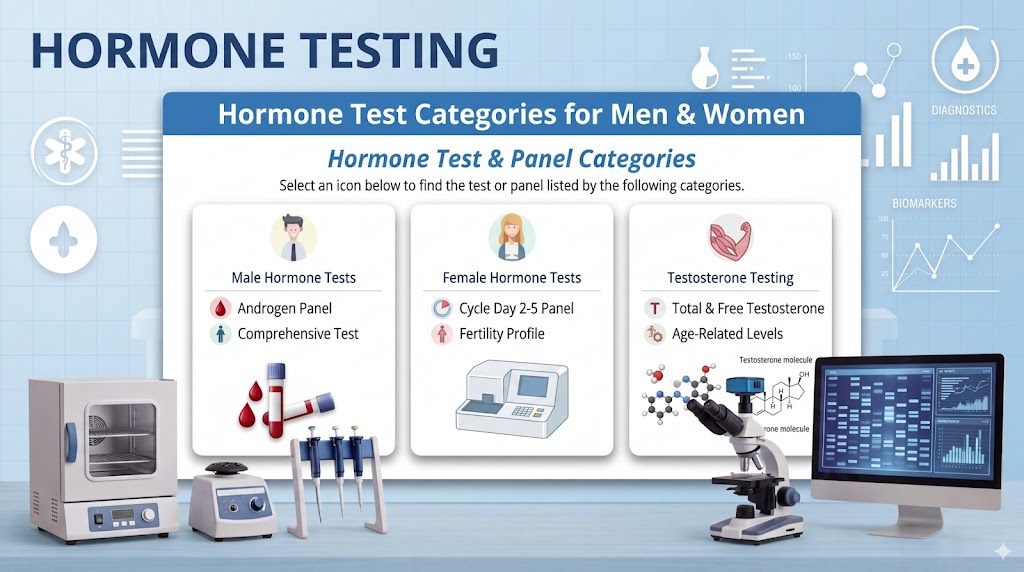
check your hormone at Health labs.
By Calli | Licensed Chiropractor & Esthetician | March 30, 2026
She had been to three different doctors in two years. Every single time, she was told her labs were normal. But she was gaining weight despite barely eating, couldn’t sleep through the night, cried without knowing why, and her skin — once clear — had started breaking out along her jaw and chin in a pattern I recognized immediately from my esthetics practice.
Her name was Sarah. She was 34. And when she finally sat down across from me in my clinic, she said the words I hear more than almost anything else: “I feel like I’m losing my mind, but everything keeps coming back fine.”
I asked her one question: “Did they run a full hormone panel — estrogen, progesterone, testosterone, DHEA, cortisol — or just a basic metabolic panel?”
She didn’t know. And that was the problem. Because “normal labs” at most standard annual checkups means your thyroid TSH was checked, your cholesterol was measured, and your blood sugar was fine. It does not mean your hormones were looked at. Not even close.
“Feeling off is not a personality trait. It’s a data problem. And a hormone panel is where the data starts.”
This is Part 2 of my Stop Guessing Your Health blood work series. Today I’m walking you through exactly what a hormone panel tests, what each marker means in plain language, and how you can order one yourself — no doctor visit, no insurance required — through HealthLabs.com.
IN THIS GUIDE
1. Why Hormones Explain So Much More Than You Think
Hormones are not just about your period or your mood. They are chemical messengers that regulate virtually every system in your body — your metabolism, your sleep architecture, your inflammatory response, your skin cell turnover rate, your cognitive function, your stress response, and yes, your weight.
When one hormone is out of range, it creates a cascade effect across multiple systems simultaneously. This is why hormone imbalance so often presents as a constellation of symptoms that seem completely unrelated — fatigue, weight gain, acne, hair loss, anxiety, poor sleep, and brain fog all happening at once. Your body isn’t falling apart in multiple places. One upstream disruption is creating downstream chaos everywhere.
The Most Common Signs Your Hormones Need Testing:
- Persistent fatigue that doesn’t improve with sleep
- Weight gain or inability to lose weight despite diet changes
- Mood changes — irritability, anxiety, low mood — without clear cause
- Jawline or chin acne in adult women (a classic hormonal breakout pattern)
- Hair thinning or excessive shedding
- Low libido
- Irregular, heavy, or painful periods
- Difficulty falling or staying asleep
- Brain fog and poor concentration
- Feeling “wired but tired” — exhausted but unable to relax
If you checked three or more of those, a hormone panel is not optional — it’s overdue.
Calli’s Tip
Hormone levels fluctuate throughout your menstrual cycle — so timing your blood draw matters. For women, the ideal window for a baseline hormone panel is Days 3–5 of your cycle (counting Day 1 as the first day of your period). This is when estrogen and progesterone are at their baseline and results are most clinically meaningful. If you’re post-menopausal or not cycling, timing matters less — but morning draws are preferred for cortisol accuracy.
2. What a Full Hormone Panel Actually Tests — In Plain Language
Here is what I want to see when a patient comes to me with the symptoms I described above. A basic estrogen check is not enough. This is the full picture.
Estrogen (Estradiol / E2)
Estradiol is the primary form of estrogen in reproductive-age women and the one most relevant to how you feel day to day. Low estradiol causes hot flashes, vaginal dryness, mood instability, and accelerated skin aging — collagen breakdown in the skin is directly linked to declining estrogen. High estradiol relative to progesterone (estrogen dominance) causes bloating, heavy periods, weight gain around the hips, breast tenderness, and worsened PMS. Testing gives you the actual number. Symptoms alone cannot tell you which direction you’re off.
Progesterone
Progesterone is estrogen’s counterbalance. When it’s low relative to estrogen — a pattern called estrogen dominance — the symptoms are significant: anxiety, insomnia, irregular cycles, and difficulty maintaining a healthy weight. Progesterone also has direct anti-inflammatory and calming effects on the nervous system. Low progesterone is one of the most common and most underdiagnosed hormone imbalances I see clinically.
Testosterone (Total and Free)
Testosterone is not just a male hormone. Women need adequate testosterone for energy, libido, muscle tone, cognitive sharpness, and motivation. Low testosterone in women presents as fatigue, low drive, difficulty building strength, and flat mood. Elevated testosterone — common in polycystic ovary syndrome (PCOS) — causes jawline acne, excess facial hair, irregular cycles, and weight gain. Testing both total and free testosterone gives the most complete picture.
DHEA-S
DHEA is an adrenal hormone and precursor to both estrogen and testosterone. It peaks in your mid-20s and declines steadily with age. Low DHEA is associated with fatigue, reduced immune function, and accelerated aging. Elevated DHEA-S can indicate adrenal overactivity and contribute to androgen-driven symptoms like acne and hair thinning.
Cortisol
Cortisol is your primary stress hormone — produced by the adrenal glands in response to physical and psychological stress. Chronically elevated cortisol drives abdominal weight gain, disrupts sleep architecture, suppresses immune function, breaks down collagen in the skin, and over time, dysregulates the entire HPA (hypothalamic-pituitary-adrenal) axis. The “wired but tired” feeling that so many of my patients describe — exhausted but unable to switch off — is often a cortisol pattern. It must be drawn in the morning for accurate baseline measurement.
FSH and LH
Follicle-stimulating hormone and luteinizing hormone regulate the menstrual cycle and ovulation. Elevated FSH in particular is a key marker for perimenopause and diminished ovarian reserve — information that is critically important for women in their late 30s and 40s who are experiencing cycle changes and want to understand what’s actually happening hormonally.
Calli’s Tip
When you get your results back, “normal range” on a lab report is not the same as “optimal range.” Reference ranges are built from large population averages and include people who are symptomatic. Always look at where within the range your number falls — and bring results to a functional medicine provider or integrative physician who understands the difference between “not sick” and “actually well.”
3. What Your Skin Is Already Telling You About Your Hormones
This is where my dual clinical background becomes genuinely useful. As an esthetician, I have spent years reading skin as a diagnostic signal — not just a cosmetic concern. And hormonal imbalance has a very specific visual language that shows up on the face long before most people connect it to blood work.
Hormonal Acne — The Jawline Pattern
Adult acne concentrated along the jawline, chin, and lower cheeks is almost always hormonal in origin — specifically driven by androgens (testosterone, DHEA) stimulating excess sebum production in the sebaceous glands concentrated in that area. In women, this pattern worsens in the week before menstruation when progesterone is declining and androgen sensitivity increases. If you’ve been treating this with topical products alone and not seeing lasting results, that’s because the source is internal. A hormone panel tells you exactly which androgen is elevated.
Premature Skin Aging — The Estrogen Connection
Estrogen directly stimulates collagen production, maintains skin thickness, supports hyaluronic acid synthesis, and regulates sebum balance. When estrogen declines — as it does in perimenopause, after hormonal birth control changes, or in cases of hypothalamic amenorrhea — the skin loses volume, elasticity, and moisture retention relatively rapidly. I can often see this pattern in a new client’s skin before she mentions any cycle changes. Testing estradiol gives you a baseline and tells you whether collagen support is genuinely needed or whether the issue is something else entirely.
Dull, Puffy Skin — The Cortisol and Thyroid Signal
Chronically elevated cortisol breaks down collagen, impairs skin barrier function, and increases systemic inflammation — manifesting as persistent redness, sensitivity, and a dull, puffy complexion that doesn’t respond well to topical treatment. This pattern often overlaps with thyroid dysfunction (which we’ll cover in Part 3), and distinguishing between them requires blood work — not guesswork.
Calli’s Tip
If you’re spending money on high-end serums and not seeing results — consider that your skin might be working against a hormonal headwind that no topical product can overcome. A hormone panel costs a fraction of what most people spend on skincare in a month. And it tells you what your skin actually needs from the inside.
4. How to Order Your Hormone Panel Without a Doctor
This is the part that surprises most people. You do not need a physician’s referral to get a comprehensive hormone panel. You do not need insurance. And you do not need to wait three weeks for an appointment to get a referral that might not even include the full panel you need.
The service I refer patients to is HealthLabs.com — a direct-to-consumer lab testing platform that uses the same CLIA-certified Quest Diagnostics and LabCorp facilities your doctor already sends you to.
Hormone Testing Panel
Estrogen · Progesterone · Testosterone · DHEA · Cortisol · FSH · LH
No doctor visit · No insurance · Results in 1–3 business days
How It Works — 4 Simple Steps:
- Order online — choose your hormone panel, pay the transparent flat price (no hidden fees)
- Receive your lab requisition — HealthLabs provides the physician’s order for you
- Walk into any of 4,500+ partner labs — Quest or LabCorp near you, no appointment needed, under 10 minutes
- Results in 1–3 business days — uploaded privately to your secure online account, not reported to insurance
👉 Order the Hormone Panel at HealthLabs.com
Calli’s Tip
Stop any biotin supplements at least 72 hours before your blood draw — high-dose biotin interferes with hormone test accuracy, including testosterone and cortisol assays. Fast for 8–10 hours before your draw if your panel includes cortisol. Drink plenty of water the morning of — it makes the blood draw faster and more comfortable.
5. What to Do With Your Results
Getting your results is step one. Understanding them — and acting on them — is step two. Here’s how I guide patients through this process.
First, do not panic at any number that falls outside the reference range. Reference ranges are population averages — they include a wide spectrum of people. What matters is the pattern: which markers are high, which are low, and how they relate to each other. Estrogen and progesterone always need to be interpreted in ratio, not in isolation.
Second, bring your results to a provider who will actually engage with them — a functional medicine physician, an integrative OB/GYN, or a naturopathic doctor with hormone expertise. These providers are trained to look at optimal ranges, not just reference ranges, and to connect blood work patterns to your specific symptom picture.
Third, use the results to make your supplement and lifestyle decisions. If your cortisol is elevated, adaptogen supplementation may genuinely help — but now you have a baseline to measure against. If your progesterone is low, you know why the magnesium glycinate helped your sleep. The data gives your choices context they didn’t have before.
Calli’s Hormone Panel Checklist — Before You Draw
- 👉 Order the Hormone Panel at HealthLabs.com — no doctor visit required
- Schedule draw on Days 3–5 of your cycle for most accurate baseline (women)
- Morning draw preferred — especially critical for cortisol accuracy
- Stop biotin supplements 72 hours before draw
- Fast 8–10 hours if cortisol is included in your panel
- Bring results to a functional medicine provider for interpretation
Coming Up Next on CalliGlowAlign
Part 3: The Thyroid Panel — Is It Burnout, or Is It Your Thyroid?
TSH alone is not a full thyroid panel. I’ll break down Free T3, Free T4, Reverse T3, and TPO antibodies — what they reveal, why most doctors don’t test them all, and what the numbers mean for your energy, metabolism, skin, and hair.
👉 Bookmark this page or subscribe to be notified when it goes live.
You deserve to know what’s actually happening inside your body — not just what’s “within normal limits.” Your hormone panel is where real answers start.
— Calli
DC, LE | Chiropractor & Licensed Esthetician
I don’t do generic advice. Everything I write, I’ve tested, applied in my clinic, and would stake my license on. If it’s here — it works.
Disclaimer: This content is for educational purposes only and does not constitute medical advice. I am a licensed chiropractor and esthetician, not a medical doctor. Always consult a qualified healthcare provider before ordering lab tests or making changes to your supplement routine.
This post contains affiliate links. As a partner with HealthLabs.com, I may earn a commission if you order through my link, at no additional cost to you. I only recommend services I personally research and clinically stand behind. My opinions are always entirely my own.