
Her nails had been splitting at the corners for almost eight months. She kept meaning to mention it to her doctor but never quite got there — it felt too small, too embarrassing, like showing up to a medical appointment to complain about your manicure. So she bought a different brand of polish, switched to a glass nail file, and quietly chalked it up to getting older.
Then the leg cramps started waking her at night. Then her hair began coming out in the shower in quantities that genuinely alarmed her. Then she came into my LA office for unrelated neck tension, and somewhere in the intake conversation she mentioned, almost as an afterthought, all three of these things at once — nails, hair, cramps — in a single sentence that ended with, “but those are probably nothing, right?”
They were not nothing. A few weeks later, her primary care doctor confirmed low iron and low vitamin D. She started a correction plan, and within a couple of months the nails steadied, the cramps stopped, and her hair shedding settled back to normal. The neck work we were doing together also started holding much better once the deficiencies were addressed.
I have been a licensed chiropractor and esthetician in Los Angeles for 20 years. I spend a lot of time thinking about what the body is trying to say when it talks quietly. Nutrient deficiencies almost never arrive dramatically. They arrive exactly the way they arrived for that patient: small, easy to dismiss, each one alone looking like nothing, all of them together telling a clear story.
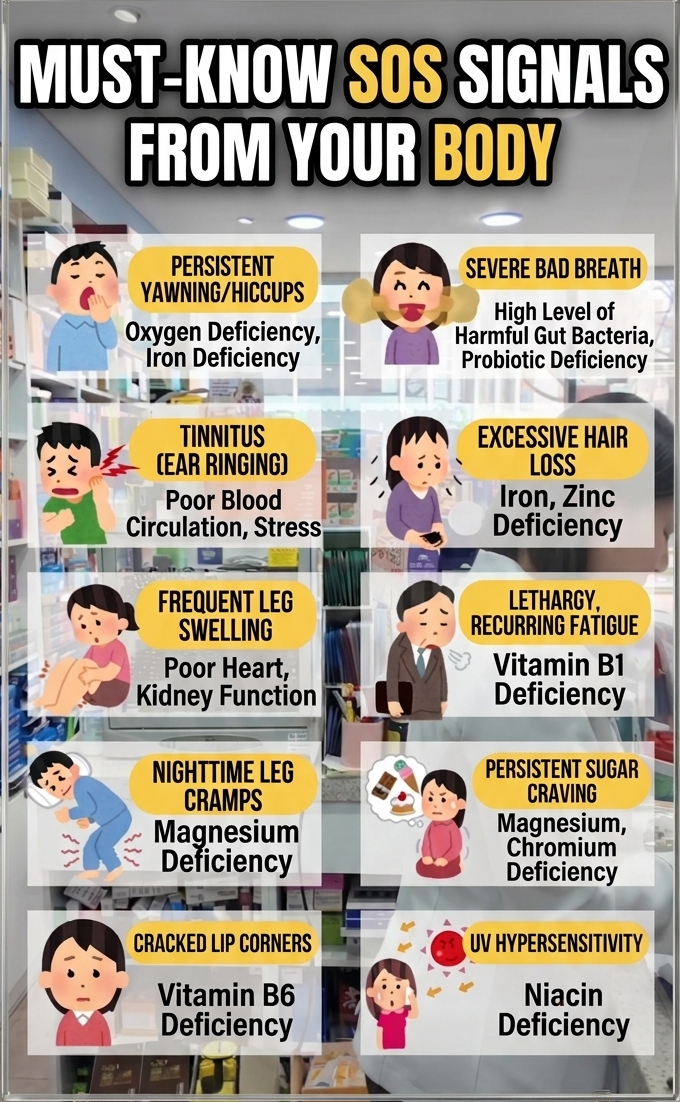
Below are the 10 signals I have learned to take seriously — not as a diagnostic list, but as a language worth learning to read.
Why Nutrients Show Up in the Body’s Smallest Details
Every cell in your body depends on a constant supply of raw materials — iron, B vitamins, vitamin D, zinc, magnesium, copper, protein, and more. When one of those drops below a functional threshold, the body makes triage decisions about who gets the remaining supply.
High-turnover tissues lose out first. Hair follicles produce a new strand roughly every 28 to 72 days. Nail cells divide constantly. Mucous membranes in your mouth and tongue replace themselves regularly. Red blood cells survive only about 120 days before being rebuilt. These tissues are expensive to run, and when raw materials run short, they are the first departments to feel the cut.
That is why so many deficiency signals are visible in hair, nails, tongue, and skin. Not because those tissues are the most important — they are not — but because they are the most metabolically demanding and the quickest to show strain when supply falls short.
Ten Signals Worth Taking Seriously
1. Hair Shedding That Does Not Stop
Most people lose somewhere between 50 and 100 strands a day, a number that is meaningless unless you know your personal baseline. What I listen for in practice is a change from normal — hair that is suddenly coming out by the handful in the shower, thinning visibly along the temples or the crown, or a ponytail that has measurably shrunk in circumference over a few months.
The most common nutritional culprits: low ferritin (the stored form of iron, which can be low even when basic iron blood tests look normal), low vitamin D, low zinc, low B12, and inadequate protein. None of these is a guaranteed diagnosis from shedding alone — hormones, thyroid status, and other factors all contribute. But persistent shedding plus any other items on this list is a real reason to ask for a blood panel.
2. Nails That Split, Ridge, or Curve
Brittle nails that peel at the edges, deep horizontal or vertical ridges, or a nail that curves upward at the tip into a spoon shape (a finding called koilonychia) can all be nutritional clues. The spoon-shaped nail, specifically, is one of the more classic signs of iron deficiency anemia. Protein and biotin shortfalls are also sometimes involved, though biotin deficiency is far less common than supplement marketing would suggest.
As a licensed esthetician who has looked at hundreds of hands during facial and body treatments, I can tell you that nail quality often gives a snapshot of what is happening nutritionally. Not a diagnosis — a clue worth following up.
3. Cracks at the Corners of the Mouth
Sore, cracked corners of the mouth that will not heal despite lip balm and staying hydrated are called angular cheilitis, and they are one of the more specific signals on this list. The most common nutritional connections are low riboflavin (B2), niacin (B3), B6, B12, and iron. Once the skin barrier cracks, the site becomes vulnerable to fungal or bacterial colonization, which is why it often looks red and inflamed and why plain moisturizer never fully resolves it.
4. A Smooth, Sore, or Abnormally Red Tongue
A healthy tongue has a slightly bumpy texture from the small projections called papillae. When the tongue loses that texture — becomes unusually smooth and shiny, or turns an angry beefy red and feels burning or sore — that is a finding I always take seriously. It can be a striking early sign of B12 deficiency, and sometimes folate or iron deficiency. It is also one of the signals that people are most likely to dismiss or attribute to something they ate. I have seen it in practice more times than I can count, always worth investigating.
5. Easy Bruising
Bruises appearing from contact you barely noticed, especially in unusual locations, can reflect low vitamin C (which is required to build collagen in blood vessel walls), low vitamin K (which plays a central role in blood clotting), or other underlying clotting-related conditions that need proper medical workup. Vitamin C deficiency in particular is underrecognized; it is less common than it once was but still occurs, especially in people who eat few vegetables and fruit.
6. The Specific Fatigue of Low Iron
Iron-deficiency fatigue has a distinct texture that patients often struggle to describe. It is not the same as tired-from-a-bad-night. It is a breathless, thin quality — exertion that feels harder than it should, a heart rate that races on stairs it used to handle easily, a pallor that shows up in the inner lower eyelids (pull the lid down gently and compare the pink to what it used to look like). Combined with pale skin and a feeling of breathlessness on light effort, this cluster is a strong signal to test iron and ferritin, not just complete blood count.
7. Leg Cramps and Muscle Twitches
Cramps that wake you at night — usually in the calf, sometimes in the arch of the foot — along with small involuntary twitches in the eyelid or calf muscle, are among the most common presentations of low magnesium. Calcium and potassium imbalances can also contribute, as can simple dehydration. These are often correctible once you know what you are dealing with, and almost universally benign in otherwise healthy people. Still worth identifying rather than accepting as a permanent fact of life.
8. Cuts and Injuries That Heal Slowly
Wound healing is a nutritionally expensive process. It requires adequate protein for the collagen that rebuilds tissue, vitamin C to run the collagen synthesis reactions, zinc to regulate inflammation and cell division, and adequate circulation to deliver all of the above. When healing consistently takes longer than it used to, or minor injuries linger in ways that seem disproportionate, low protein, low vitamin C, or low zinc are worth including in a differential conversation with your doctor.
9. Difficulty Seeing in Low Light or Chronically Dry Eyes
Vitamin A is required for producing rhodopsin, the pigment your eyes use to adapt to darkness. Early vitamin A insufficiency often shows up as difficulty adjusting when walking from a bright space into a dark one, or gritty, chronically dry eyes that do not respond well to lubricating drops. Frank vitamin A deficiency is uncommon in many developed populations, but mild, persistent shortfalls — especially in people who eat very few orange and yellow vegetables and avoid dairy and eggs — can quietly affect eye function over time.
10. Tingling or Numbness in the Hands or Feet
This is the one I do not let people brush off. Persistent tingling, numbness, or a pins-and-needles sensation in the extremities can be a sign of B12 deficiency affecting the peripheral nerves — and if B12 deficiency goes unaddressed long enough, that nerve damage can become difficult to reverse fully. It can also be a sign of several other conditions, including diabetes and lumbar nerve compression, which is why new neurological symptoms in the hands or feet warrant proper evaluation rather than self-treatment.
The Case Against Guessing Your Way Through the Supplement Aisle
Here is where I have to be honest with you, even though it is not what the supplement industry wants said out loud.
Reading a list like this and then loading up a cart with every nutrient mentioned is not a strategy. It is a guess with real risks attached. Fat-soluble vitamins — A, D, E, and K — accumulate in body fat and can cause toxicity at high doses taken long-term. Iron is genuinely dangerous to supplement in excess; it drives oxidative damage and can be harmful for people who do not actually need it. And if you start supplementing before testing, you erase the baseline your doctor would have used to figure out what was actually wrong.
The correct sequence is: test first, correct what the test confirms, re-test on schedule to verify the correction worked. A reasonable starting panel through your primary care doctor might include a complete blood count, ferritin and iron studies, vitamin D (25-hydroxyvitamin D), vitamin B12, folate, and a basic metabolic panel. Your doctor may add or subtract based on your specific history and symptoms.
Who Tends to Run Low and Why
Certain situations genuinely raise your risk of running into one of these deficiencies — and knowing your risk helps you decide whether to ask for testing proactively, before symptoms appear.
People eating strict plant-based diets without thoughtful planning around B12 (which is found almost exclusively in animal products) and iron (which is less bioavailable from plant sources) are consistently the most common nutritional deficiency cases I see in a West LA practice full of health-conscious people. Ironically, the healthier the diet seems from the outside, the more blind spots it can create.
Heavy or prolonged menstrual bleeding is the most common cause of low iron and ferritin in women of reproductive age — a fact that is underappreciated and under-tested. Pregnancy and breastfeeding dramatically increase demands for iron, folate, B12, vitamin D, and iodine. Older adults absorb B12 less efficiently as stomach acid production declines with age. Anyone who has had bariatric surgery, who has celiac disease, Crohn’s disease, or other gut conditions affecting absorption, or who has been on metformin or proton pump inhibitors long-term is also in a higher-risk category worth discussing with a doctor.
A Practical Way to Use This List
Write down every signal that applies to you — even the ones that feel too small or too embarrassing to mention. Not to diagnose yourself, but to hand your doctor a complete picture instead of one symptom at a time. The pattern, presented all at once, is diagnostic information. Each individual item, disclosed in isolation across separate appointments, often gets dismissed or treated piecemeal.
Bring the list. Ask which blood panels make sense given the combination. Correct what testing confirms, under guidance, at the dose your physician recommends. Retest on schedule.
And meanwhile: eat a varied, real-food diet across colors. Adequate protein — more than most people think they need. Vegetables and fruit. Whole grains and legumes if tolerated. Healthy fats. The foundation matters, not because it replaces deficiency treatment, but because it is what keeps you from accumulating deficiencies in the first place.
When to Call a Doctor Rather Than Wait
Most of the signals on this list, if mild and isolated, are reasonable to note, track, and bring up at your next scheduled appointment. A few deserve faster action:
- New tingling, numbness, or weakness in the hands or feet — get evaluated, not self-treated
- Severe fatigue that interferes with your ability to work, move, or care for yourself
- Easy bruising that is new and unexplained, especially with other bleeding symptoms
- Significant unintended weight loss accompanying any of the above
- Any combination of multiple signals that has been building for more than a few weeks without explanation
Your body is genuinely trying to communicate with you through these signals. The best thing you can do is learn the language, stay curious rather than alarmed, and get the right test rather than the most supplements. The fix, once you know what you are actually dealing with, is almost always straightforward.
— Calli, DC, LE | Licensed Chiropractor & Esthetician, Los Angeles
Medical disclaimer: This article is for educational purposes only and does not constitute medical advice or diagnosis. Chiropractors do not diagnose or treat nutrient deficiencies. Any suspected deficiency should be evaluated with appropriate blood testing by your primary care physician before beginning supplementation.
Related Articles