
By Calli | Licensed Chiropractor & Esthetician | April 6, 2026
Last November I watched a woman break down crying at the Korean Air counter at LAX Tom Bradley International Terminal. Her passport had a tiny water stain across the photo page — barely noticeable, she thought — and the airline refused to board her. A $3,200 flight to Bangkok, two weeks of PTO, a hotel already paid for. Gone. I stood behind her in line holding my own boarding pass, heart pounding, silently flipping open my passport to triple-check the expiry date for the fourth time that morning.
As a chiropractor who treats patients for post-travel back pain, swollen ankles, and pinched nerves every single Monday morning in my Santa Monica clinic, I have heard hundreds of travel horror stories — and nearly all of them were preventable. A compression sock that was never packed. Medication left on the bathroom counter. A carry-on that was two kilograms over the budget airline limit, triggering a $75 gate fee. Over the years I started building a checklist — not just the typical “don’t forget your charger” list, but a clinically informed, document-verified, body-protective system I now hand to every patient who mentions an upcoming trip. This post is that checklist, expanded, explained, and ready for you to screenshot before your next international flight.
“Dr. Calli, I spent two days of my honeymoon in Bali lying flat on the hotel bed because my lower back seized up on the 16-hour flight. If I had done even half the things on your checklist, I would have actually enjoyed my trip.”
— Rachel M., patient since 2023
IN THIS GUIDE
- Passport, Visa, and Document Non-Negotiables
- Luggage Strategy: Weight Limits, Budget Airlines, and Compression Packing
- Travel Health and First Aid Kit — The Clinical Edition
- Seasonal Clothing and Climate-Smart Layering
- Tech, Connectivity, and Power: eSIM, Adapters, and Portable Chargers
- Accommodation Prep Most People Skip Entirely
1. Passport, Visa, and Document Non-Negotiables
This is the section that saves trips. Every other item on this checklist can be purchased at the airport or at your destination. A passport cannot. A visa cannot. And if the name on your flight ticket does not match your passport letter-for-letter, you will not board.
Passport Validity: The Six-Month Rule
Most countries — including Thailand, Japan, Indonesia, the Philippines, and all Schengen zone nations — require that your passport remains valid for at least six months beyond your date of entry. This means if your passport expires in September 2026 and you plan to arrive in Bali on April 15, 2026, you technically have five months and fifteen days of validity. That is not enough. You will be denied boarding or turned away at immigration.
- Check the expiry date right now: Open your passport. Count six months forward from your departure date. If your passport expires before that date, renew immediately — expedited renewals through the State Department currently take 4-6 weeks.
- Inspect for physical damage: Water stains on the photo page, a cracked laminate, torn pages, or excessive wear can trigger rejection at check-in. Airlines and border officials have discretion to refuse damaged travel documents. The woman I saw at LAX had a passport that was technically valid — it was the water damage that ended her trip.
- Blank pages: Some countries require one or two blank pages for entry stamps. If your passport is nearly full, this alone can cause denial of entry.
- Make two photocopies: Keep one in your carry-on and email a scan to yourself. If your passport is lost or stolen abroad, having a copy accelerates the emergency replacement process at the nearest U.S. embassy.
Visa and Entry Requirements: Country-Specific Research Is Mandatory
Do not assume that because you traveled to a country five years ago without a visa, the rules are the same today. Entry requirements change frequently. As of early 2026, for example, U.S. passport holders can enter Japan visa-free for up to 90 days, but Indonesia now requires a Visa on Arrival (VOA) payment, and several European countries are rolling out the ETIAS electronic travel authorization system.
- Check the official government website: Use the destination country’s immigration site or the U.S. State Department’s country information page — never rely solely on blog posts or forums for visa accuracy.
- eVisa and online applications: Many countries (Turkey, India, Kenya, Sri Lanka) now require electronic visas submitted days or weeks before arrival. Missing the processing window means missing your flight.
- Transit visas: If you have a layover in a country where you are not a citizen, check whether you need a transit visa to pass through immigration — even if you never leave the airport, some nations require one.
Flight Ticket Name Match
Your name on the airline ticket must match your passport exactly. Not your nickname. Not your maiden name if you recently married. Not a shortened version. If your passport says “Katherine Elizabeth Rivera” and your ticket says “Katie Rivera,” the airline can refuse boarding. I have had two patients in the last year alone who had to rebook same-day flights because of this exact mismatch.
Calli’s Tip
Set a calendar reminder 8 months before your passport expires. Renewal takes longer than you think, especially between January and June when travel season demand spikes. And the moment you book a flight, open your passport and compare the name character by character to your ticket confirmation email. It takes 15 seconds and can save thousands of dollars.
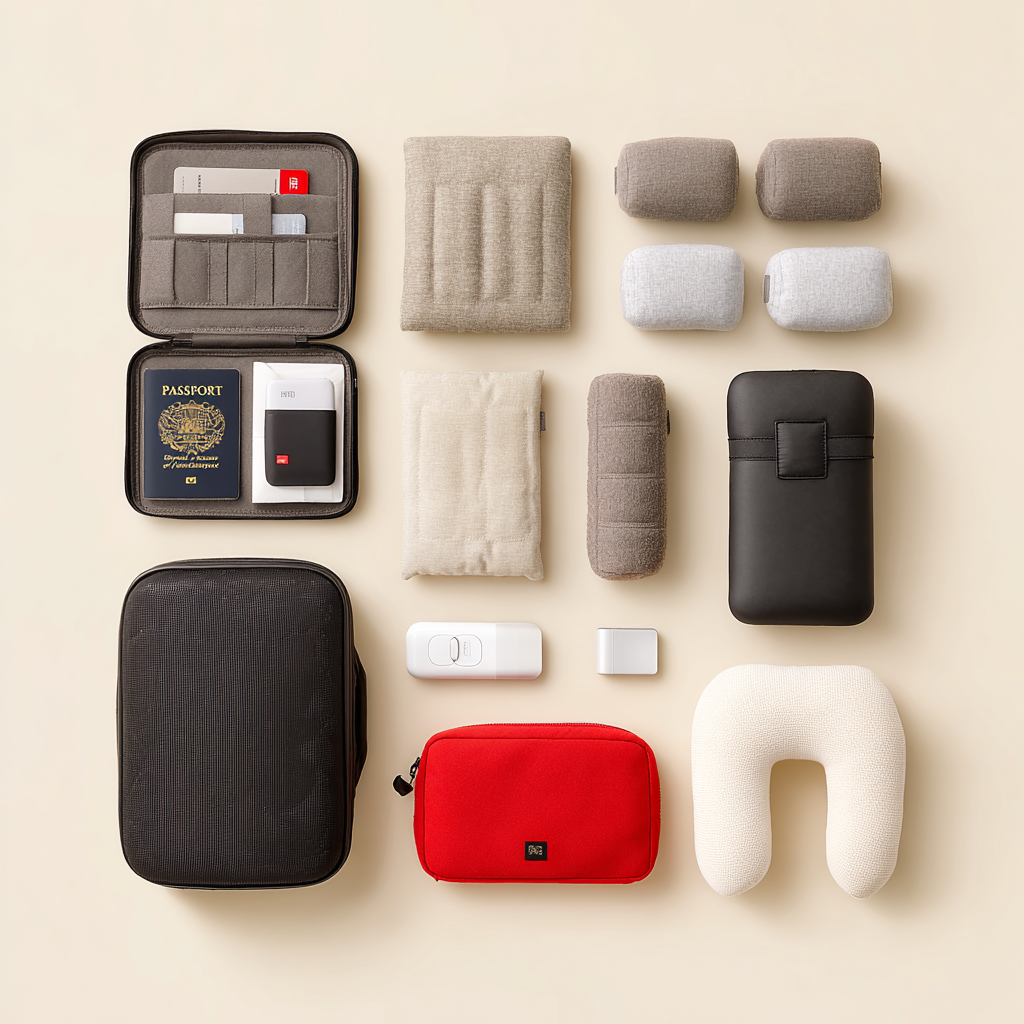
💙 Calli’s Pick · Travel Document Organizer
Travel Document Organizer RFID
RFID-blocking · Passport + boarding pass slots · Water-resistant exterior
I carry one of these on every trip — it keeps my passport, copies, insurance card, and boarding passes in one secure place.
2. Luggage Strategy: Weight Limits, Budget Airlines, and Compression Packing
Here is where most travelers hemorrhage money they did not plan to spend. Budget airlines — AirAsia, Ryanair, Scoot, Cebu Pacific, Spirit — have fundamentally different baggage policies than full-service carriers. The ticket price looks impossibly cheap because baggage is not included. Understanding this before you book is the difference between a $400 trip and a $600 one.
Budget Airline Baggage: What You Actually Get
- Carry-on only by default: Most budget airlines include one personal item or small carry-on (typically 7-10 kg max). Checked luggage is an add-on purchased separately, and pre-purchasing online is almost always cheaper than paying at the airport counter.
- Weight limits are strictly enforced: Budget carriers weigh carry-on bags at the gate. If your bag is 8.2 kg on a 7 kg limit, you will be asked to remove items or pay an overweight fee — sometimes $50-75 on the spot. I once watched a traveler at Don Mueang Airport in Bangkok pull out a winter coat and wear it onto the plane in 90-degree heat just to make weight.
- Checked bag allowance on budget carriers: Typically 15-20 kg when purchased as an add-on. Full-service airlines usually include 23 kg checked and up to 50 lbs for U.S. domestic.
- Measure dimensions too: Airlines specify both weight AND dimensions. A bag that fits the weight limit but exceeds the size limit (e.g., 56 x 36 x 23 cm for many carriers) can also be flagged.
Compression Packing: Reclaim Half Your Suitcase
Compression packing cubes are one of the highest-impact, lowest-cost travel upgrades you can make. They work by squeezing air out of soft items like clothing, reducing their volume by roughly 40-60%. This does not reduce weight — fabric weighs the same compressed or not — but it frees up physical space in your bag so you can organize better and avoid checking a second bag.
- One cube per category: I use one for tops, one for bottoms, one for undergarments and socks, and one for workout or sleepwear. This also makes unpacking at the hotel instantaneous — you pull out four cubes and drop them in a drawer.
- Waterproof bag for wet or dirty items: Pack one empty waterproof bag specifically for swimsuits, wet clothes, or dirty laundry. This prevents moisture from migrating to clean clothes — a mildew disaster I have seen ruin patient vacation wardrobes more than once.
The Luggage Scale: A $12 Investment That Pays for Itself Immediately
Buy a small digital luggage scale. Weigh your bag at home before you leave. Weigh it again at the hotel before your return flight (you will inevitably buy things). This single habit has saved me hundreds of dollars in overweight fees across dozens of trips. You hook the strap around your bag handle, lift, and read the display. It takes five seconds.
Calli’s Tip
Before every international trip, go to the airline’s official website — not Google, not a travel blog — and screenshot the exact baggage dimensions and weight allowance for your fare class. Save it on your phone. Gate agents do not care what a Reddit post told you. They care about the policy displayed on their screen. And always pre-purchase checked baggage online if you need it. Airport counter prices are consistently 30-50% higher.
💙 Calli’s Pick · Compression Packing Cubes
Compression Packing Cubes for Travel
Double-zip compression · Multiple size set · Lightweight ripstop fabric
These are in my suitcase on every single trip. They cut packing volume nearly in half and keep everything organized for the full duration of the trip.
3. Travel Health and First Aid Kit — The Clinical Edition
This is the section I care about most, both as a chiropractor and as someone who has personally dealt with food poisoning in Mexico City and a deeply inflamed mosquito bite that swelled to the size of a golf ball in Chiang Mai. A small, well-curated first aid kit does not take up significant luggage space, but it can mean the difference between a minor inconvenience and a ruined day — or an expensive urgent care visit in a country where your insurance may not apply.
The Core First Aid Items I Pack on Every International Trip
- Painkillers (ibuprofen and acetaminophen): Ibuprofen is an anti-inflammatory — it reduces swelling, which makes it ideal for headaches with tension, joint pain after a long flight, or muscle soreness from carrying luggage. Acetaminophen (Tylenol) works differently — it blocks pain signals centrally without reducing inflammation, making it better for fevers and gentle on the stomach. I carry both because they address different problems, and they can be alternated safely if needed.
- Digestive medication: An antidiarrheal (loperamide/Imodium) and an antacid (famotidine or calcium carbonate). Traveler’s diarrhea affects up to 40-60% of people visiting developing countries, according to the CDC. Having loperamide means you can manage symptoms while seeking medical care if needed, rather than being immobilized in your hotel room.
- Adhesive bandages and small gauze pads: Blisters from walking in new sandals, a scrape from a motorbike in Bali, a coral cut while snorkeling. These happen constantly. A blister left uncovered in tropical humidity becomes an infection risk.
- Lubricating eye drops: Airplane cabins have humidity levels around 10-20%, which is drier than the Sahara Desert. Long flights dehydrate the surface of your eyes aggressively. If you wear contact lenses, preservative-free artificial tears are critical to prevent corneal irritation.
- Mosquito repellent with DEET (20-30%): DEET remains the gold standard for mosquito-borne disease prevention. Dengue fever, malaria, and Zika are real risks in tropical destinations. Apply to exposed skin at dusk and dawn — mosquitoes that carry dengue (Aedes species) bite during the day, while malaria-carrying Anopheles mosquitoes are most active at night.
- Broad-spectrum sunscreen (SPF 50+): UV exposure is significantly higher near the equator and at altitude. A single severe sunburn on day one of your trip compromises your skin barrier for the rest of the vacation, increasing sensitivity, peeling, and long-term photoaging damage. I recommend SPF 50 mineral sunscreen for face and a lightweight chemical SPF 50 for body.
Travel Insurance: The Invisible Safety Net
I will be direct: if you are traveling internationally without travel insurance, you are gambling with your financial security. A broken ankle in Europe can cost $15,000-$25,000 without insurance. An emergency medical evacuation from a remote island in Southeast Asia can exceed $50,000. Travel insurance typically costs $40-$120 for a two-week international trip and covers medical emergencies, trip cancellation, lost luggage, and sometimes even flight delays.
- Check your credit card first: Some premium credit cards include basic travel insurance if you purchased the flight on that card. Call the number on the back and ask specifically what is covered and what the claim process looks like.
- Supplemental travel insurance for longer trips: If your credit card coverage is limited (most cap at $50,000 medical), consider a standalone travel insurance policy. Look for plans that cover emergency medical evacuation, pre-existing conditions (if applicable), and 24/7 assistance hotlines.
Calli’s Tip
Pack your first aid items in a clear, quart-sized zip bag inside your carry-on — not your checked luggage. If your checked bag gets lost (which happens on roughly 0.5% of international flights, according to SITA data), you still have pain relief, digestive meds, and eye drops accessible. Medication in a lost checked bag on the other side of the world is useless. Also, keep all medications in their original packaging or with a pharmacy label — some countries flag loose pills in unlabeled containers at customs.
💙 Calli’s Pick · Travel First Aid Kit
Travel First Aid Kit
TSA-compliant size · Pre-stocked essentials · Compact zippered pouch
I keep a pre-packed version of this ready in my closet so I never scramble to assemble first aid supplies the night before a flight.
4. Seasonal Clothing and Climate-Smart Layering
I have been guilty of this myself: packing for the weather I want instead of the weather that actually exists. I once flew to Osaka in March expecting cherry blossom warmth and stepped out of Kansai Airport into 45-degree rain with nothing but a cotton hoodie. As a chiropractor, I can tell you that cold, tense muscles combined with jet lag and heavy luggage lifting is a recipe for cervical strain (neck injury) and acute lower back spasm. What you wear — and what you pack — directly impacts your musculoskeletal health on a trip.
The Layering Principle for Any Climate
- Light jacket or packable down: Even tropical destinations have aggressively air-conditioned airports, shopping malls, and tour buses. A lightweight jacket also protects you during unexpected rain. Pack one that compresses into its own pocket — it takes up almost no luggage space.
- Swimsuit: Even if you are not going to a beach destination, many hotels and Airbnbs have pools, hot tubs, or saunas. Not packing a swimsuit means you miss those recovery opportunities.
- Slippers or slide sandals: For the hotel room, airport security lines, and hostel showers. Walking barefoot in shared accommodation environments is a direct path to plantar warts and fungal infections. From a chiropractic perspective, thin-soled supportive slippers also prevent the arch strain that comes from walking barefoot on hard hotel floors.
- Waterproof bag or dry bag: A small 5-10 liter dry bag protects your phone, wallet, and electronics during boat trips, rainstorms, and water-heavy excursions. I also use mine as a dirty laundry separator inside my suitcase on the return trip.
Climate Research: Check Actual Weather, Not Assumptions
Two weeks before departure, check the 14-day forecast for your destination. Not the “average temperature for the month” — the actual forecast. Southeast Asia’s “dry season” can still produce afternoon thunderstorms. Europe’s “summer” can drop to 55 degrees at night in cities like Prague or Edinburgh. Pack for the range, not the average.
Calli’s Tip
Wear your bulkiest items on the plane — boots, your heaviest jacket, thick jeans. This frees significant weight and space in your luggage and keeps you warm on the flight (cabin temperatures typically hover around 72 degrees Fahrenheit, but can dip lower on red-eyes). It is also one of the simplest ways to stay under a budget airline weight limit without sacrificing anything from your packing list.
5. Tech, Connectivity, and Power: eSIM, Adapters, and Portable Chargers
Nothing creates travel anxiety quite like landing in a foreign country with no phone connectivity, a dead battery, and no idea how to get from the airport to your hotel. Tech preparation is not optional for international travel — it is as essential as your passport. Your phone is your map, your translator, your boarding pass, your emergency contact tool, and your ride-hailing app. If it dies or cannot connect, you are functionally stranded.
eSIM vs. Physical SIM: What to Know Before You Land
- eSIM (embedded SIM): If your phone supports eSIM (most iPhones from XS onward, most flagship Samsung and Google Pixel devices), you can purchase a data plan before you leave home and activate it the moment you land. No physical card swapping. No finding a SIM shop at the airport. Providers like Airalo, Holafly, and Nomad offer destination-specific or regional plans starting around $5-$15 for a week of data.
- Physical SIM card: If your phone does not support eSIM, buy a local SIM card at the airport arrivals hall. Most international airports have carrier kiosks just past immigration. Make sure your phone is unlocked before you travel — carrier-locked phones will not accept a foreign SIM. Call your provider and ask if you are unsure.
- International roaming as a last resort: Carrier roaming plans (T-Mobile, AT&T International Day Pass, etc.) work but are expensive compared to eSIM or local SIM options. Use them only as a backup, not a primary strategy.
Portable Charger and Multi-Adapter
- Portable charger (power bank): I recommend a minimum of 10,000 mAh capacity, which provides roughly two full phone charges. For long travel days — 12+ hours of transit with layovers — a 20,000 mAh bank is worth the slight extra weight. Note: power banks must be carried in your carry-on, not checked luggage, per airline lithium battery regulations.
- Universal multi-adapter: Plug types vary by country (Type A in the U.S., Type G in the UK, Type C in most of Europe, Type O in Thailand). A single universal adapter covers all of these. Buy one that includes USB-A and USB-C ports so you can charge multiple devices simultaneously without needing separate cables.
Calli’s Tip
Download offline Google Maps for your destination before you leave home. Open Google Maps, search for the city, tap the three-dot menu, and select “Download offline map.” This allows full GPS navigation even without cell service. I do this for every city I visit, and it has saved me multiple times when I had no data — including once in a taxi in Istanbul where the driver was heading the wrong direction and I could see it in real time on my offline map.
💙 Calli’s Pick · Portable Charger
Portable Charger Pick
20,000 mAh capacity · USB-C and USB-A output · Flight-approved size
This is the one I grab every single trip. It gets me through the longest travel days without ever worrying about a dead phone.
6. Accommodation Prep Most People Skip Entirely
You booked the Airbnb. You confirmed the hotel. You assume everything will be there when you arrive. But accommodation assumptions are one of the most common sources of trip frustration, especially when booking budget stays, hostels, guesthouses, or non-hotel accommodations abroad.
What to Confirm Before You Arrive
- Bedding and towels: Many Airbnbs, vacation rentals, and budget accommodations do not include towels — or charge extra for them. Some hostels provide a flat sheet but no blanket. Read the listing description carefully and message the host to confirm. This information is often buried in fine print.
- Check-in time and method: International check-in times are not standardized. Some hotels allow early check-in; many do not. If you arrive at 7 AM after a red-eye, knowing in advance whether you can access your room or need to store luggage prevents standing in a lobby for six hours.
- Kitchen and laundry access: If you are staying longer than five days, having access to a kitchen saves significant food costs. Laundry access (in-unit or nearby laundromat) means you can pack lighter — five days of clothes covers a two-week trip if you wash midway through.
- Neighborhood safety and transport proximity: Check the accommodation’s distance from the nearest metro or bus station. Read recent reviews specifically for safety comments. A “great deal” on a rental that requires a 30-minute walk from public transit at midnight is not actually a great deal.
The Hotel Pillow Problem: A Chiropractor’s Rant
I see it in my clinic every week: patients who come back from vacation with neck pain and headaches that started on night one. Hotel pillows are notoriously inconsistent — too flat, too thick, overstuffed with polyester, or shaped in a way that forces your cervical spine (the seven vertebrae in your neck) into flexion or extension all night. If you have a history of neck pain or tension headaches, consider packing a compact travel pillow that you actually sleep on — not just the U-shaped airplane one, but a thin, rollable pillow that provides proper cervical support in bed. The small luggage sacrifice is worth not losing three days of your trip to a cervicogenic headache (a headache originating from the joints and muscles in your neck).
Calli’s Tip
Send your accommodation host a message 48 hours before arrival with three specific questions: (1) Is bedding and towels included? (2) What is the exact check-in procedure and earliest possible check-in time? (3) Is there anything I need to bring that is not provided? This 30-second message has prevented more trip frustration for my patients than any other single piece of advice I give. Hosts appreciate proactive guests, and you arrive prepared instead of surprised.
💙 Calli’s Pick · Travel Pillow
Ergonopic Travel Pillow Set
Cervical support design · Compresses for packing · Washable cover
I recommend this to every patient who travels more than twice a year. Proper neck support during sleep prevents the post-vacation neck pain I treat constantly.
Your Complete International Travel Checklist — Quick Links
- 👉 Travel Document Organizer — RFID-blocking passport and boarding pass holder
- 👉 Compression Packing Cubes — Cut packing volume by up to 60%
- 👉 Travel First Aid Kit — TSA-compliant, pre-stocked essentials pouch
- 👉 Portable Charger — 20,000 mAh, dual-port, flight-approved
- 👉 Travel Pillow — Cervical-support design for hotel and in-flight sleep
Coming Up Next on CalliGlowAlign
Long Haul Flight Wellness Guide
Your legs will swell, your back will ache, and your skin will dry out — unless you follow a chiropractor’s in-flight protocol. I am breaking down every stretch, compression strategy, hydration rule, and seat adjustment that keeps your body intact on flights over six hours.
👉 Bookmark this page or subscribe to be notified when it goes live.
International travel is one of the most expansive, perspective-shifting things you can do for your health — mental, emotional, and physical. But only if you actually get to enjoy it. Every ruined trip I hear about in my clinic traces back to something small that was skippable: an expired passport, a forgotten medication, an overweight bag, a dead phone at customs. This checklist exists so that the only surprises you encounter abroad are the good ones — the unexpected alley restaurant, the view from the temple, the conversation with a stranger that changes how you see the world. Prepare ruthlessly so you can be present fully.
— Calli
DC, LE | Licensed Chiropractor & Esthetician | Align your body. Glow from within. Travel with intention.
This post contains affiliate links. I earn a small commission from qualifying purchases at no additional cost to you. All products featured are ones I personally use and clinically recommend. My opinions are always entirely my own.
Related Articles